
In aerospace manufacturing, components must endure extreme thermal cycling, mechanical stress, and aggressive environmental exposure over decades of service life. To ensure structural integrity and strict safety compliance, regulatory bodies mandate permanent, high-contrast, non-destructive identification for every component. Traditional marking methods often struggle with complex component geometries or risk introducing micro-fractures that compromise structural integrity.
Custom Special Purpose Machine (SPM) solutions address these challenges directly. Investing in an advanced SPM laser marking aerospace system provides a permanent, high-contrast tracking method that integrates seamlessly into high-throughput production lines. These automated machines eliminate human error, reduce cycle times, and meet rigorous aerospace marking standards on both flat surfaces and irregular, multi-axis geometries.
Why Aerospace Manufacturers Need SPM Laser Marking
Aerospace original equipment manufacturers (OEMs) and tier-1 suppliers operate under stringent quality management systems like AS9100. Component tracking requires absolute precision throughout the part lifecycle, making aerospace marking a critical production step rather than a secondary process.
Standard, off-the-shelf laser markers often fall short when processing complex aviation components. Standard systems typically feature a fixed focal distance and a restricted working envelope, requiring manual repositioning for asymmetrical parts, cylindrical housings, or large structural airframe components. This manual intervention introduces variation, increases handling times, and risks part damage.
Custom SPM laser marking systems are engineered around the specific geometry of the part and the layout of the production line. By integrating multi-axis motion control (such as 3D dynamic focusing optics and programmable rotary axes), an SPM system dynamically adjusts its focal point in real time. This ensures consistent spot size and energy density across varying surface planes, delivering clean, readable marks on complex parts without manual repositioning or mechanical changeovers.
2D and 3D Marking Challenges in Aerospace Components
Marking a flat aerospace nameplate is straightforward, but modern aviation components rarely feature simple, flat geometries. Engineers frequently face the challenge of executing pristine 2D 3D marking on complex, irregular surfaces.
The Problem with Irregular Surfaces
When marking a curved part laser marking configuration—such as a cylindrical hydraulic actuator or a contoured turbine bladea standard 2D laser galvo scanner loses focus as the surface slopes away from the central focal plane. This defocusing causes the laser beam to expand, dropping the energy density below the material’s ablation or annealing threshold. The result is an uneven mark: crisp at the apex, but faded, distorted, or unreadable along the curves.
Maintaining Structural Integrity
Aerospace materials require specific laser wavelengths and pulse characteristics to prevent material degradation:
- Titanium & Stainless Steel: Require precise thermal control to produce a dark, oxide-rich surface anneal without altering the underlying grain structure or causing micro-cracking.
- Composites & Carbon Fiber: Prone to delamination and heat-affected zones (HAZ) if exposed to incorrect wavelengths.
- Coated/Anodized Layers: Require precise ablation layers to achieve high contrast without stripping the component’s underlying corrosion protection.
Benefits of Automated Aerospace Laser Marking Systems
Implementing a specialized laser marking automation cell delivers significant advantages across the factory floor, directly supporting Industry 4.0 and smart manufacturing initiatives
1. Complete Elimination of Manual Error
Automated SPM systems utilize pneumatic clamping, robotic interface positioning, and vision-guided part alignment. The machine automatically detects the part orientation, loads the correct marking file from the Manufacturing Execution System (MES), and executes the program, ensuring zero human indexing errors.
2. High-Speed Production Repeatability
For aerospace suppliers handling high-volume components, consistency is critical. Multi-axis laser marking systems use high-speed servo-driven stages or collaborative robot arms to manipulate either the laser head or the component. This allows for rapid multi-surface marking in a single cycle, maximizing throughput.
3. Comprehensive Data Integration and Traceability
Modern aerospace compliance relies heavily on clear aerospace traceability marking. Custom systems can pull real-time data—such as unique batch codes, serialization numbers, timestamps, and manufacturing origin details—directly from secure corporate databases. This data is instantly converted into high-density 2D DataMatrix codes or UIDs, marked onto the component, and validated by an integrated vision system before moving to the next assembly stage.
Applications of SPM Laser Marking in Aerospace Manufacturing
Custom aerospace marking setups are engineered to process a diverse range of specialized materials and geometric configurations:
- UID and QR Code Traceability: High-density DataMatrix codes marked directly onto turbine components, landing gear assemblies, and structural brackets to ensure permanent visibility through refurbishment cycles.
- Curved Titanium Part Marking: Delivering low-heat, high-contrast annealing on critical engine components without altering material fatigue limits.
- Cylindrical Aerospace Component Marking: Utilizing continuous, synchronized rotary axes to mark seamless part numbers and graduations around the circumference of fuel lines and hydraulic shafts.
- Aerospace Nameplate Marking: Rapid, high-volume fiber laser engraving of data plates made from stainless steel, aluminum, or specialized polyamides.
- Coated Material Processing: Cleanly ablating dark topcoats on cockpit control panels and display bezels to create precise, backlit text and icons.
High-Performance Laser Systems for Aerospace Production
Achieving the high level of repeatability required for aerospace production demands robust, industrial-grade equipment. Sahajanand Laser Technology Limited (SLTL Group) provides a comprehensive ecosystem of laser processing hardware tailored for high-accuracy applications.
Dedicated Marking & Traceability Systems
For custom aerospace marking lines, SLTL Group offers several core laser configurations that serve as the foundation for specialized Special Purpose Machines:
- ENZO: A highly customizable laser marking solution operating at capacities up to 200W. Its modular architecture makes it an ideal choice for integration into robotic automation cells and multi-axis 3D marking configurations.
- NEO: A multipurpose, high-power fiber laser marking machine designed for deep engraving and high-speed marking on dense alloys like titanium, nickel superalloys, and structural steel.
- REX & Flexy: The REX series utilizes stable diode laser technology for consistent traceability marking. When component geometry or floor space requires a mobile configuration, the Flexy system provides portable diode marking capabilities for large, non-transportable airframe assemblies.
- Nova & Ultra: The Nova system offers high-power, customized marking configurations ranging from 200W to 500W, making it suitable for high-speed automated lines. The Ultra series provides a low-power fiber laser option for clean, high-contrast surface annealing on thin-walled materials and specialized instrument nameplates.
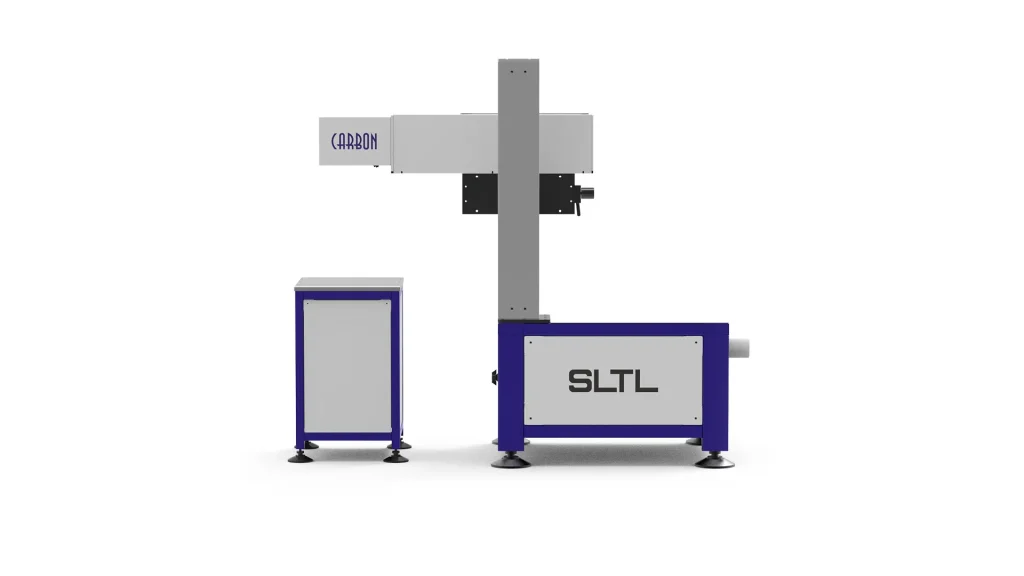
- OptiFly & Carbon: These specialized CO2 laser systems are optimized for non-metallic processing. The OptiFly and Carbon series deliver precise, high-speed marking on aerospace plastics, wiring insulation, and advanced composite materials.
Complementary High-Accuracy Production Systems
Beyond part identification, structural aerospace fabrication requires high-precision cutting and welding technologies. SLTL Group’s machinery portfolio handles heavy-duty processing across various production steps:
- X5: A specialized 5-axis 3D laser cutting machine designed for trimming complex, deep-drawn hydroformed sheets, stamped panels, and curved structural profiles common in aviation.
- Future X & Infinity F1: The Future X delivers high-accuracy laser cutting for intricate sheet metal brackets and sandwiched aluminum panels. For heavy-duty structural plates and thick-gauge alloy cutting, the high-power Infinity F1 provides rapid throughput with minimal heat distortion.
- IntegreX: A compact, entry-level fiber laser processing system that provides efficient cutting for standard components, helping sub-tier suppliers maintain high productivity.
Integrating these specialized cutting platforms alongside automated marking systems creates an efficient production environment. Manufacturers can combine 3D cutting on the X5 with high-speed tube laser cutting and advanced high-accuracy laser processing for aerospace lines. This unified production approach ensures tight tolerances and reliable part tracking from raw stock to final assembly.
Choosing the Right Aerospace Laser Marking Solution
Selecting the optimal special-purpose laser platform requires a thorough evaluation of your specific production parameters.
| Manufacturing Parameter | Production Impact | Recommended Laser Technology |
| Component Material | Titanium, Inconel, Stainless Steel | High-Power Fiber Laser (NEO, ENZO) |
| Surface Profile | Compound Curves, Variable Steps | 3D Dynamic Focus Galvo + Multi-Axis Gantry |
| Component Geometry | Cylindrical, Tubes, Actuators | Synchronized Rotary Axis Integration |
| Material Type | Carbon Fiber, Glass Composites | CO2 / UV Specialized Laser (OptiFly) |
| Production Volume | High-Throughput, In-Line Tracking | Fully Automated Robotic Cell Integration |
By aligning your specific material types, surface geometries, and cycle-time requirements with the correct laser source and multi-axis motion setup, you ensure compliant, permanent traceability that stands up to harsh aerospace operating conditions.
Transform Your Aerospace Manufacturing Traceability
Meeting strict aerospace quality and compliance standards requires specialized production tools. Standard, one-size-fits-all marking setups often introduce manual bottlenecks and quality variations that modern aerospace supply chains cannot tolerate.
Implementing a custom custom aerospace marking systems solution from SLTL Group helps secure your production workflow. These specialized systems deliver the automated precision, multi-axis path flexibility, and data integration needed to handle challenging 2D and 3D component profiles reliably.
Optimize Your Production Line
Whether you need to scale up your high-volume component lines, integrate smart automated tracking cells, or implement advanced aerospace laser welding and cutting systems, our engineering team can design a solution for your facility. Contact our technical team today to request an application evaluation, arrange a system demonstration, or discuss your custom aerospace automation requirements.
Frequently Asked Questions
1. How do SPM laser marking systems comply with aerospace standards like AS9100 and Mil-Spec?
Custom marking systems are engineered to provide deep, high-contrast surface finishes or precise, non-destructive material annealing that meets strict regulatory standards. These systems interface directly with factory MES databases to ensure accurate serialization, generating clear 2D DataMatrix codes that maintain readability through chemical processing, thermal stress, and extended service lifecycles.
2. Can an SPM laser system mark components with irregular or complex 3D contours?
Yes. By utilizing advanced 3D dynamic focusing galvo heads alongside synchronized multi-axis motion controls (such as programmable rotary axes and linear gantries), the laser maintains an optimal focal spot size across compound curves, variable steps, and cylindrical profiles. This eliminates the need for manual component indexing or mechanical adjustments during the cycle.
3. What materials common to aerospace production can be processed with these systems?
These industrial systems are designed to process a wide variety of aerospace-grade materials. This includes dense metals like titanium, Inconel, stainless steel, and aluminum alloys, as well as anodized or coated surfaces, specialized polymers, and structural carbon-fiber composites.
4. How do custom automation features reduce cycle times and manual handling?
By incorporating specialized pneumatic clamping, vision-guided part registration, and robotic pick-and-place systems, operators do not need to manually locate or reposition complex parts. The machine automatically verifies part positioning, loads the matching program, adjusts focus across the 3D surface, and verifies code readability in a single, continuous sequence.
5. What is the difference between laser engraving and laser annealing for aviation components?
Laser engraving removes material to create a deep mark, which is highly durable but must be carefully managed on thin-walled structural parts to avoid creating stress concentrations. Laser annealing uses controlled thermal energy to induce a localized color change beneath the material surface without removing metal, preserving the component’s structural integrity and corrosion resistance.
6. Can these systems be integrated into an existing Industry 4.0 smart factory environment?
Yes. The control architectures of modern custom platforms support standard industrial protocols like OPC UA and Profinet. This allows the marking cells to interface directly with robotic loaders, automated vision inspection cameras, and plant-wide ERP/MES systems for end-to-end data tracking.
Related Posts

Why Smart Workshops Are Moving to Fine Focus Lenses Right Now
In today’s competitive fabrication market, every micron matters. Workshops that…

Why Smart Workshops Are Moving to Fine Focus Lenses Right Now
In today’s competitive fabrication market, every micron matters. Workshops that…
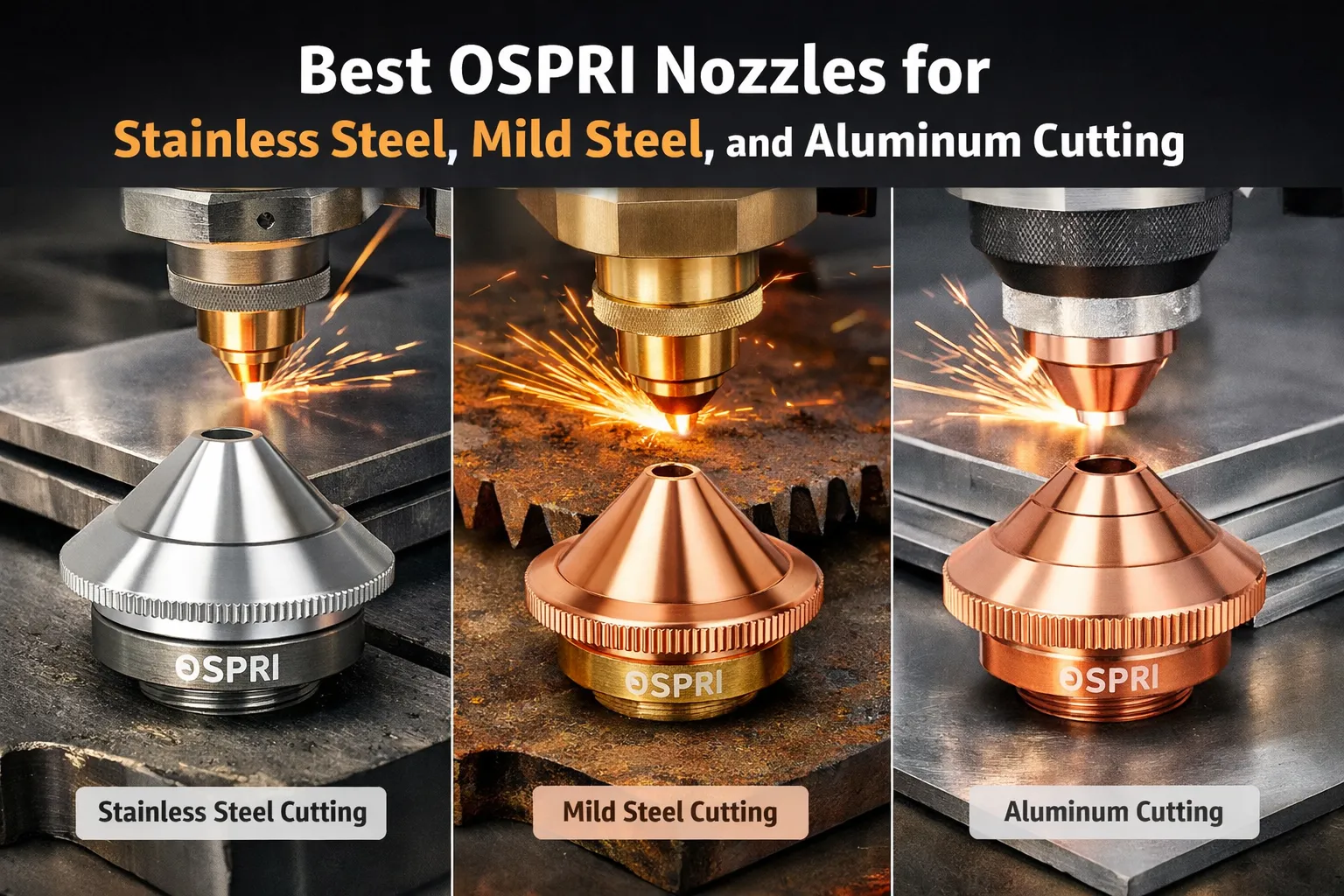
Best OSPRI Nozzles for Stainless Steel, Mild Steel, and Aluminum Cutting
Laser cutting quality depends strongly on the nozzle you choose.…